studio chahar
Sarzurzuma Pavilions
Gouron, Qeshm Island, Iran. Since 2020. Community-based intervention.
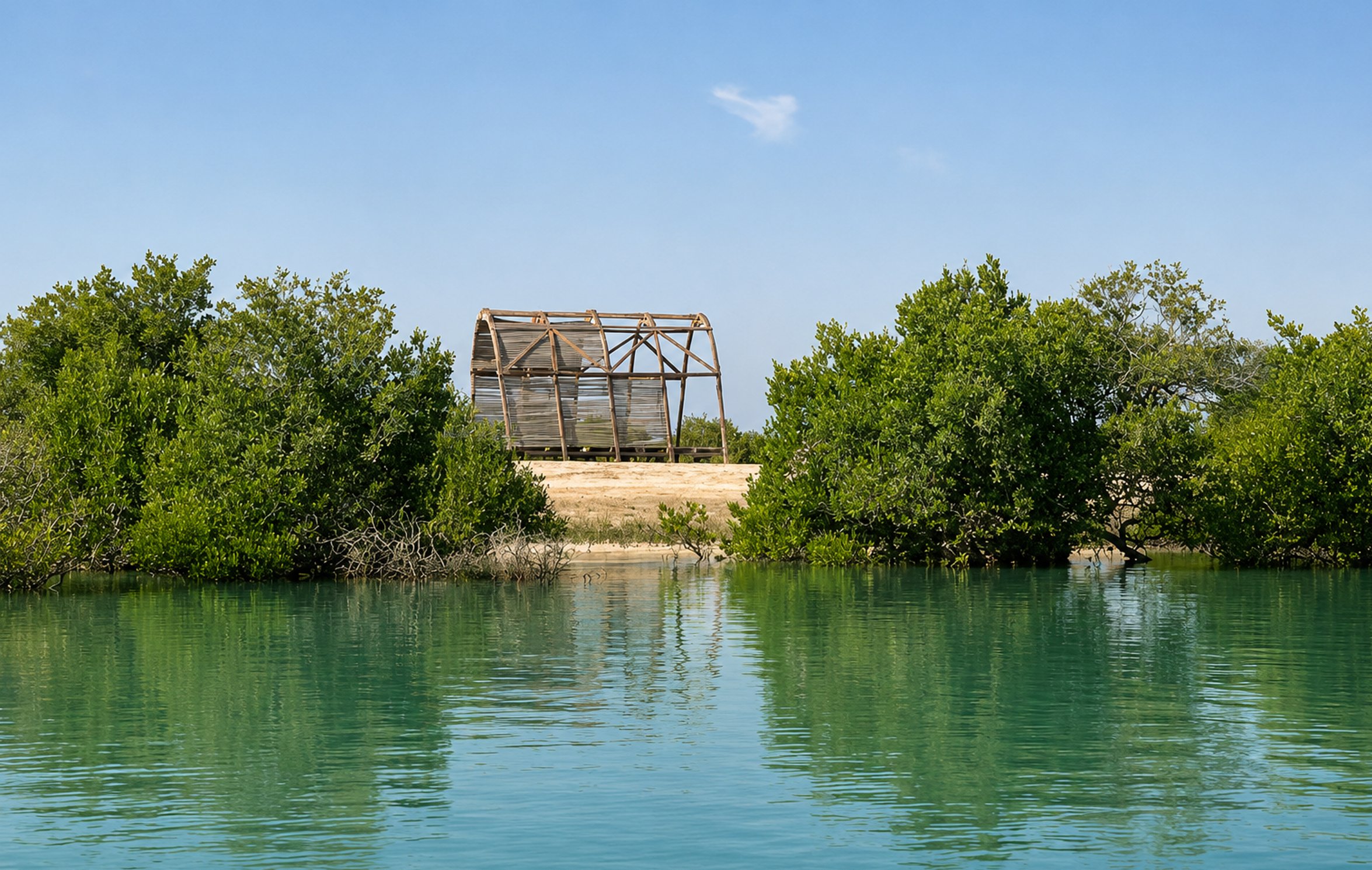
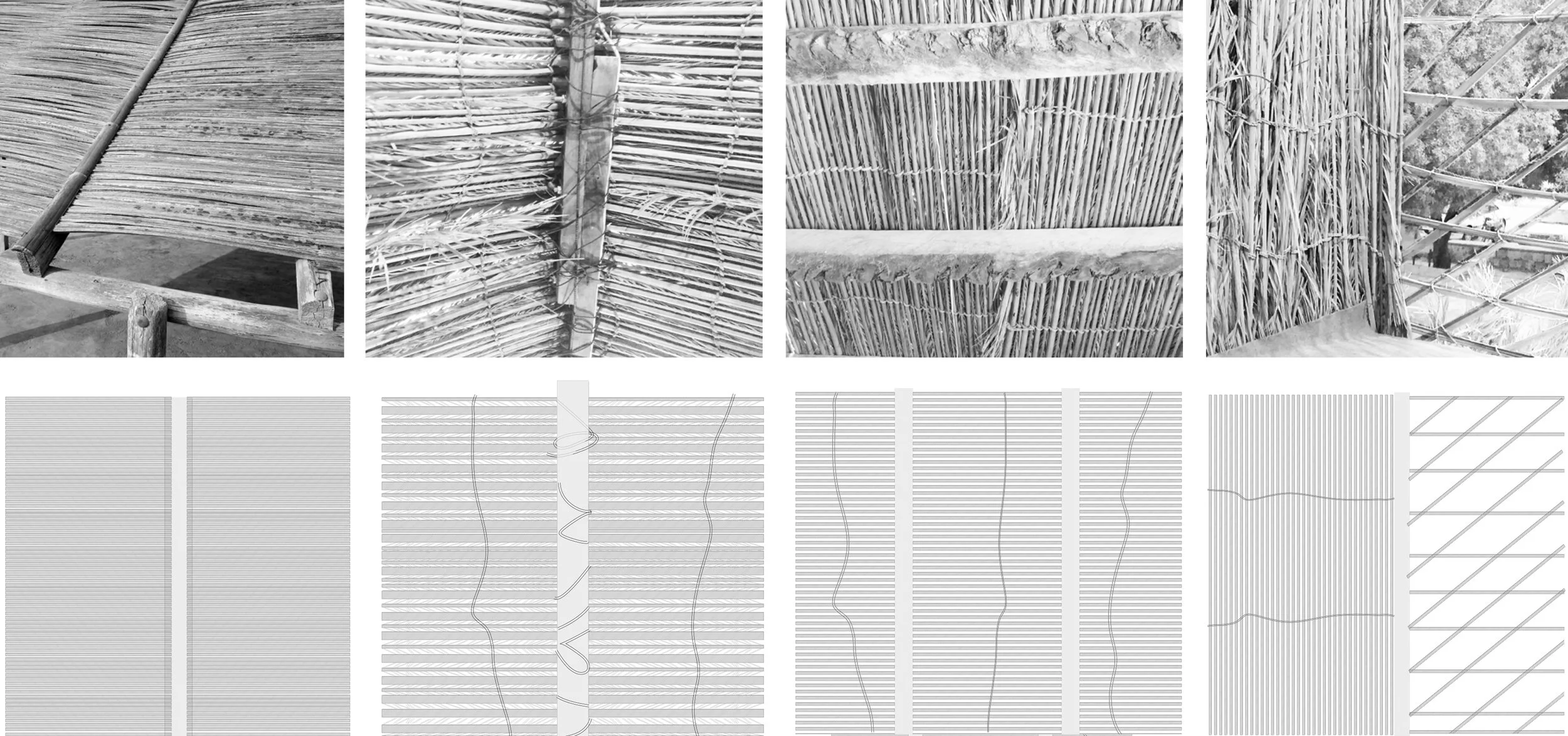
Working closely with the community of Gouron, we have been developing strategies to promote responsible ecotourism at the site. The refuge pavilion draws on local boatbuilding techniques, which UNESCO lists as Intangible Cultural Heritage in Need of Urgent Safeguarding, and on palm-weaving traditions.
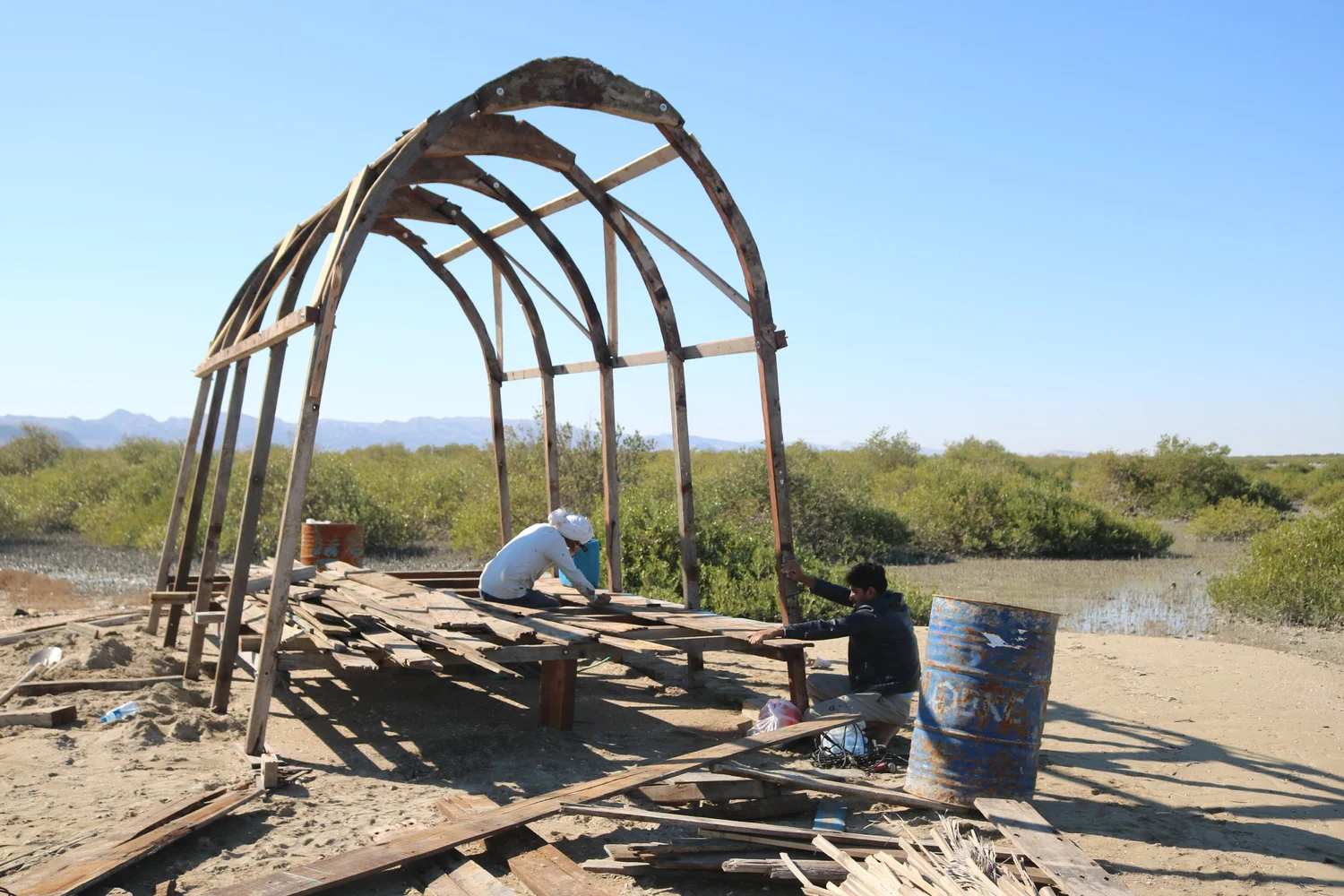
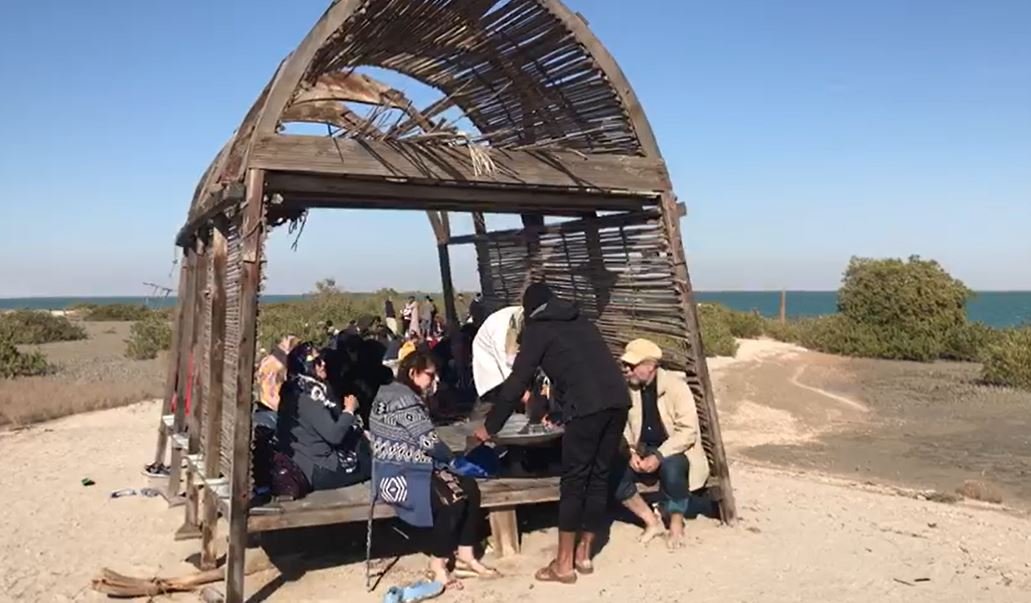
It uses salvaged materials from old boats and wooden detailing that echoes boat craftsmanship, encouraging the community to preserve its cultural heritage for tourism and economic growth. The pavilions serve as accommodation for nature campers, a platform for tents at night and shelter and shade during the day.
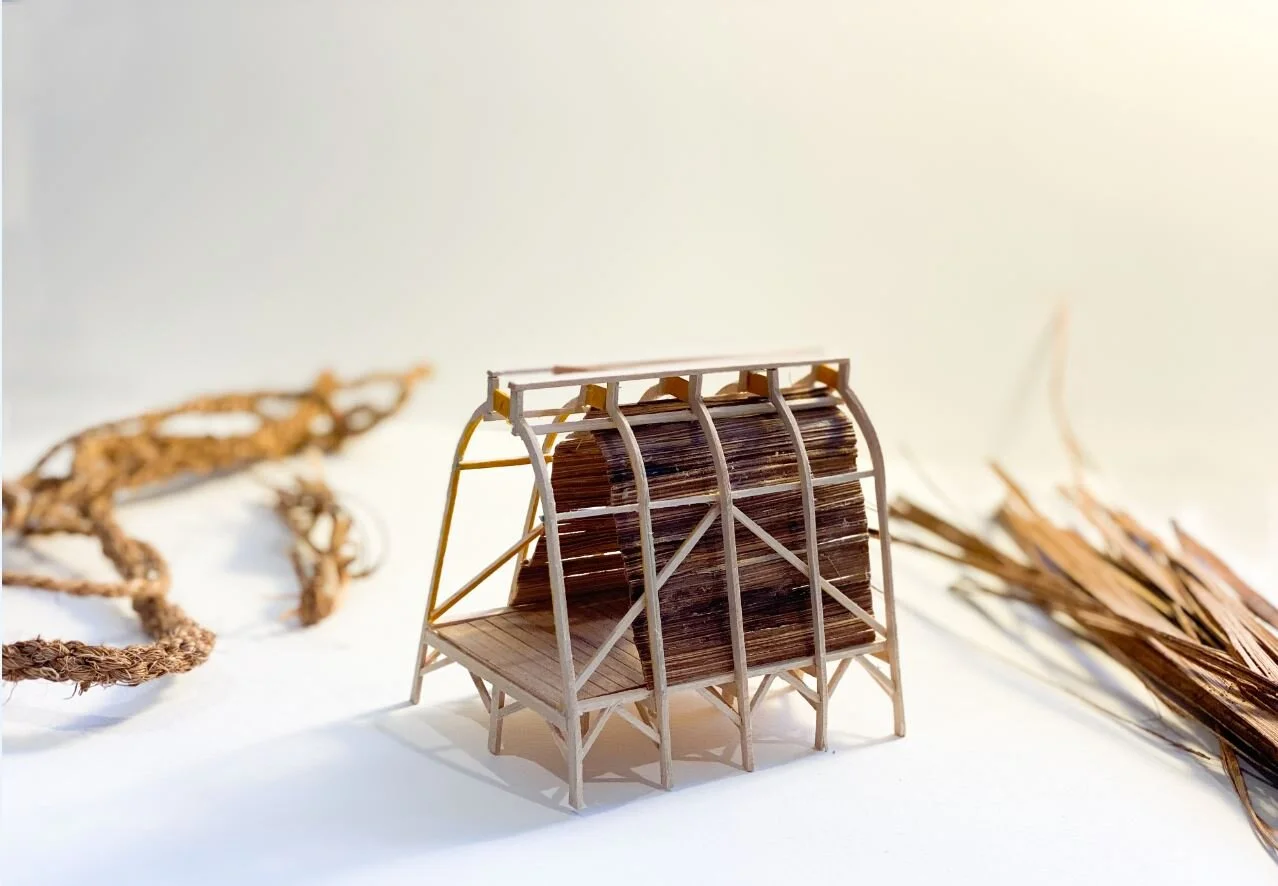
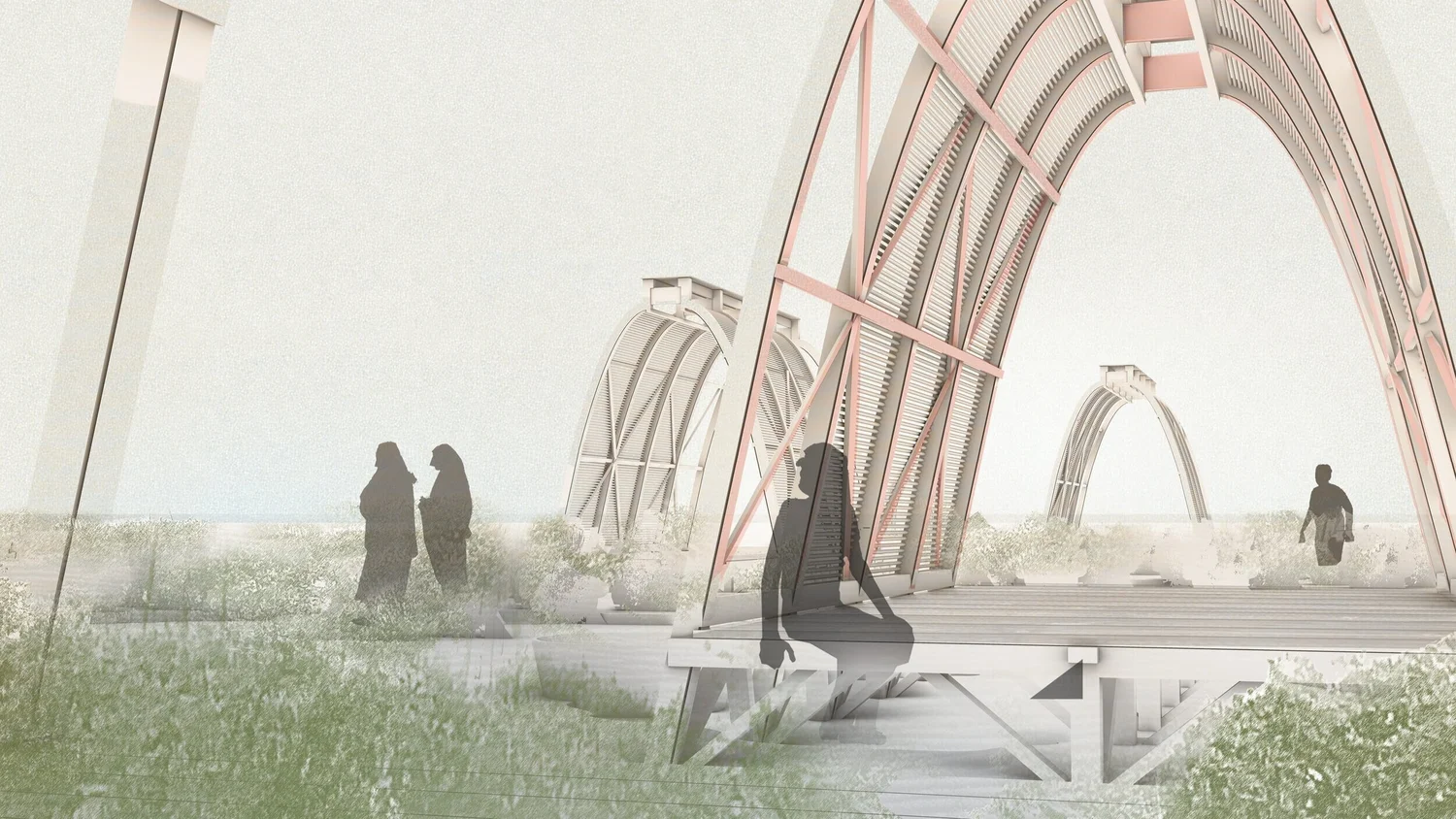
The vaults face south, letting sunlight in during winter and giving shade in summer. The base form takes inspiration from Hara roots, spreading weight evenly to help stabilize the sand. The modular form can be adjusted to the materials available, and the exterior is made with local weavers and a team of young women from the village, completed gradually with the participation of visitors.
Seven pavilions will be built on site, symbolically representing the region’s history and teaching visitors about the cities connected to Gouron along the Maritime Silk Route of the Strait of Hormuz. A prototype of the first pavilion has been completed with the help of village volunteers and visitors, and serves as a campground and a site for participatory educational programs. A wooden walkway and a boat access wharf are planned to reduce foot traffic on the reef.
Credits